



When you start looking for a shower filter, you quickly find yourself in a world of grand claims. "Removes 99% of all harmful substances." "Transforms your shower into a spa experience." "Patented technology for radiant hair."
The problem isn't that all these claims are untrue. The problem is that you can't verify which ones are true—unless you know what to look for.
This is what matters.
Filter Layers: What's Inside?
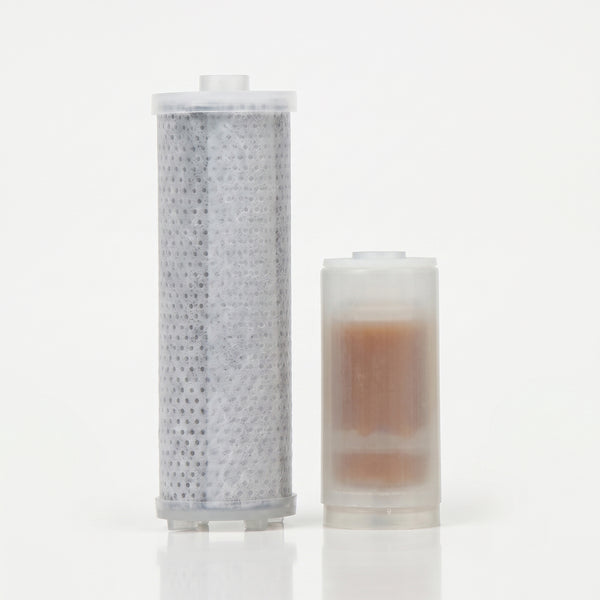
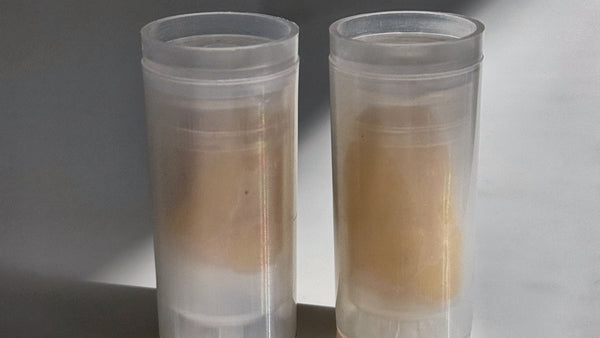
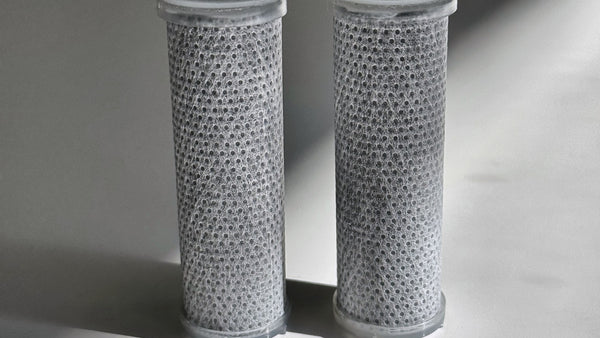
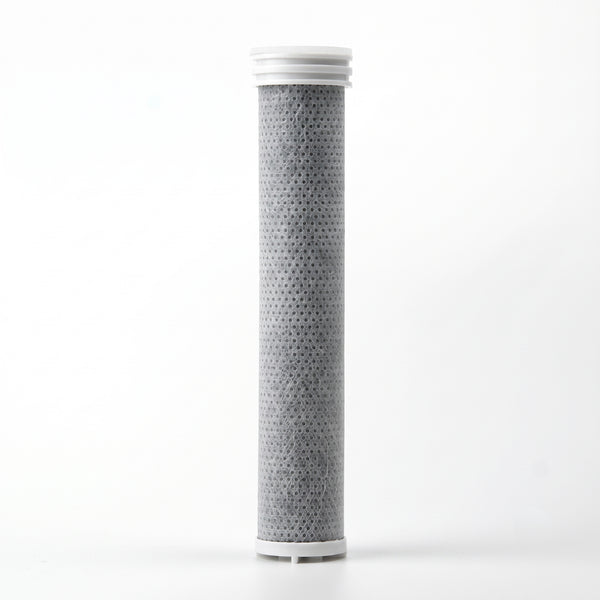
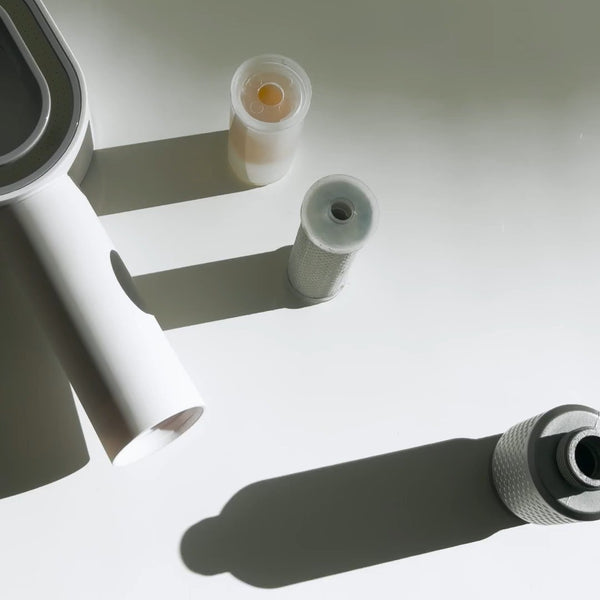
A shower filter is only as good as the materials inside it. The most common filter layers are:
Vitamin C — neutralizes chlorine on contact. Effective and fast, but less effective at high water temperatures if it's the only filter layer.
Activated carbon — absorbs chlorine, volatile organic compounds, and some pesticides. The workhorse layer of most filters.
KDF-55 — an alloy of copper and zinc that reduces heavy metals and hydrogen peroxide through an electrochemical process. Effective against lead, mercury, and iron.
Calcium sulfite — tackles residual chlorine that other layers miss. Also works at higher temperatures, which is relevant in a shower.
One filter layer is better than no filter. But the combination of these four provides the broadest coverage. Make sure a manufacturer specifically states which layers are included—not just "multi-stage filtration system" or "advanced filter technology."
Test Standards: Is it Proven?
This is where the biggest difference lies. Many shower filters claim a certain percentage of chlorine reduction. But the question is: tested by whom?
The relevant standard is NSF/ANSI 177. This is an internationally recognized test protocol specifically for shower filters. It tests chlorine reduction under realistic conditions—not in a laboratory with stagnant water at room temperature, but at the pressure and temperature of a real shower.
If a manufacturer claims "99% chlorine reduction" without referring to a test standard, you cannot verify that figure. Nor can you if the lab report is not public.
Material: What is it Made Of?
The housing of a shower filter might seem like a detail, but it determines how long the product lasts and how it looks after six months of daily use.
Plastic housings are cheaper but can discolour, crack with temperature changes, and feel less solid. Chrome-plated housings look good initially but can peel.
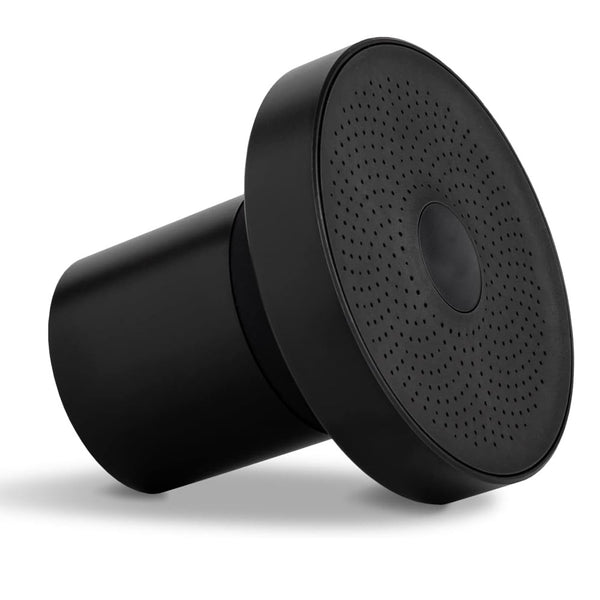
Anodized aluminum is more durable: it is corrosion-resistant, lightweight, and retains its finish. It costs more to produce, but you won't replace it after a year.
Filter Lifespan: How Long Does It Last?
Most shower filters have a filter lifespan of two to four months, depending on your water usage and water hardness. That's normal—the filter gets saturated with the substances it captures.
Pay attention to two things: the cost of a replacement filter and how easy it is to order. Some brands use subscription models where you automatically receive filters. This can be convenient, but it might also mean you're paying for filters you don't need yet.
Look at the total cost over a year, not just the purchase price.
What You Can Ignore
A few things you'll encounter in marketing that say little about the quality of the filter:
"Spa experience" or "wellness ritual" — that's positioning, not a product specification.
"Patented technology" — a patent means something is unique, not that it's better. The filter layers themselves are known and proven; their combination and execution determine effectiveness.
"Recommended by dermatologists" — without a name, research, or context, this is an empty claim.
"Suitable for all water types" — technically true for most filters, but it says nothing about how well the filter performs with your specific water hardness.
The Core
A good shower filter does three things: neutralize chlorine, reduce heavy metals, and demonstrably do so. Everything else—the packaging, the marketing, the lifestyle positioning—is secondary.
Look at the filter layers, ask for the lab report, and calculate the annual cost. You can ignore the rest.